C2MCI Research Faculty Members receive New Frontiers in Research Fund: 2025 Exploration funding
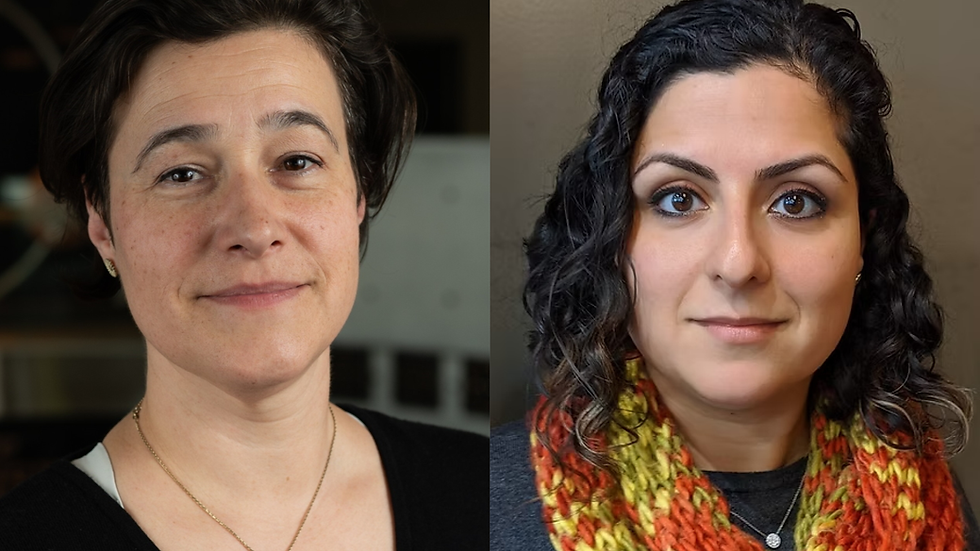
The Carbon to Metal Coating Institute (C2MCI) is pleased to share that Research Faculty members Dr. Farnaz Heidar-Zadeh and Dr. Janine Mauzeroll have been selected as recipients of New Frontiers in Research Fund: 2025 Exploration funding.
The New Frontiers in Research Fund (NFRF) supports world-leading interdisciplinary, international, high-risk / high-reward, transformative and rapid-response Canadian-led research. The NFRF Exploration stream seeks to inspire projects that bring disciplines together by research teams with the capacity to explore bold, innovative research that has potential for significant impact.
Dr. Marc-André Légaré and Dr. Janine Mauzeroll (McGill University) have been awarded $250,000 for the project titled, “A Circular Energy System Based on the Combustion of Metals through their Recycling using Carbenes.”
This research brings together a multidisciplinary team with backgrounds in organometallic chemistry, electrochemistry, and engineering to design a fully circular model for metals as energy vectors. To accomplish this, specially designed N-heterocyclic carbenes (NHCs) will be used to solubilize metal oxides and enable their recycling. The project will study the interaction between combustion conditions, the efficiency of NHC solubilization, and electrowinning efficiency.
Dr. Farnaz Heidar-Zadeh (Queen’s University) and Dr. Ricardo Baptista (University of Toronto) have received $250,000 for the project titled, “Machine-Learning Guided Design and Discovery of Metallophilic Organic Materials for Cancer Therapeutics.” C2MCI celebrates the contributions of Faculty Member Dr. Kevin Stamplecoskie (Queen’s University) to this project as a successful co-applicant.
The project will integrate cutting-edge machine learning (ML) models and automated robotic labs to expedite the experimental and computational development of N-heterocyclic carbene (NHC) nanoclusters for cancer therapy. By leveraging available data on these compounds, this multidisciplinary team will train ML models to uncover patterns and capture structure-property relationships at a scale unattainable by humans, accelerating the design of next-generation cancer treatments.
C2MCI sincerely congratulates the successful applicants and looks forward to sharing future results.